
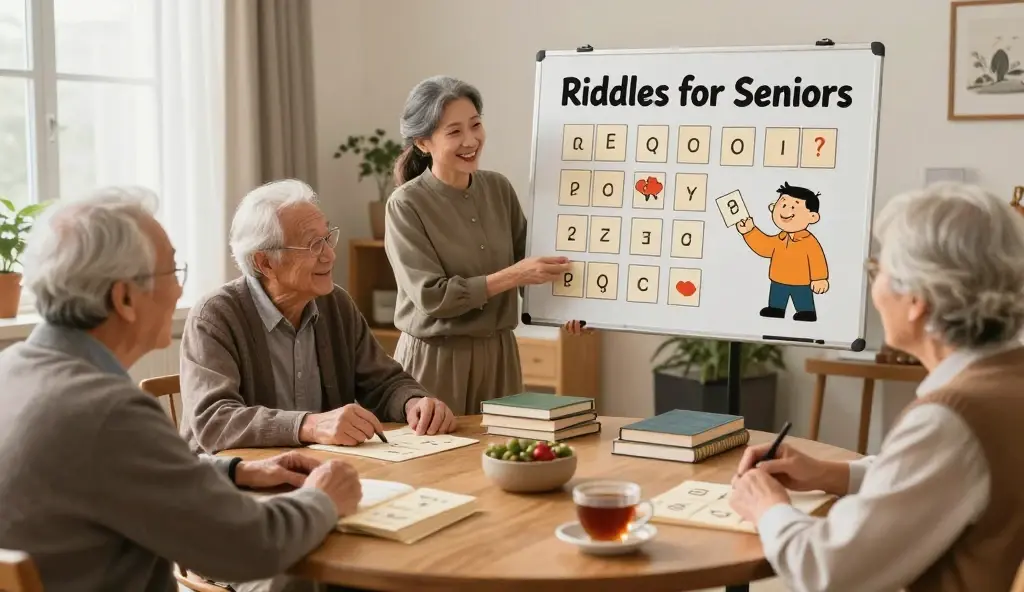
Riddles for seniors are a wonderful way to keep the mind active, entertained, and engaged.
These brain teasers are not too childish or too complicated—they are designed to be fun, relaxing, and mentally stimulating.
They help improve memory, focus, and cognitive flexibility while also bringing a bit of humor and nostalgia.
🧠 What Are Riddles for Seniors?

Riddles for seniors are thoughtful puzzles that encourage reasoning, recall, and word association.
👴 Designed for adults and older learners 👵
🧠 Support memory and brain health 🧠
😄 Provide entertainment and humor 😄
💬 Encourage conversation and social bonding 💬
🌟 Why Seniors Enjoy Riddles
🎯 Keep the mind active and sharp
😄 Reduce stress through humor
🧠 Boost memory recall
🤝 Encourage social interaction
📚 Provide light mental exercise
🧩 Easy & Fun Riddles for Seniors With Answers

🧠 Classic Logic Riddles
🤔 What has a head, a tail, but no body?
Answer: A coin.
🧩 What gets bigger the more you take away?
Answer: A hole.
😄 What runs but never walks?
Answer: Water.
🧠 What can travel around the world while staying in one corner?
Answer: A stamp.
💡 What has keys but no locks?
Answer: A piano.
😂 Funny Riddles for Seniors
🤣 Why did the scarecrow win an award?
Answer: Because he was outstanding in his field.
😆 What kind of room has no doors or windows?
Answer: A mushroom.
😂 What has four wheels and flies?
Answer: A garbage truck.
😄 What has a face and two hands but no arms or legs?
Answer: A clock.
🤣 What gets wetter the more it dries?
Answer: A towel.
🧠 Wordplay Riddles
🤔 What begins with T, ends with T, and has T in it?
Answer: A teapot.
💬 What can you hold without touching it?
Answer: A conversation.
🔍 What disappears as soon as you say its name?
Answer: Silence.
📦 What has branches but no fruit, trunk, or leaves?
Answer: A bank.
🎯 What has many keys but cannot open doors?
Answer: A keyboard.
🧓 Memory-Friendly Riddles
🧠 What belongs to you but others use it more than you?
Answer: Your name.
🤔 What comes once in a minute, twice in a moment, but never in a thousand years?
Answer: The letter M.
💡 What can be seen once in a year, twice in a week, but never in a day?
Answer: The letter E.
📚 What has pages but cannot read?
Answer: A book.
🧩 What can break without being touched?
Answer: A promise.
🌍 Everyday Life Riddles
🏡 What has a neck but no head?
Answer: A bottle.
🚪 What opens doors but has no hands?
Answer: A key.
📞 What has a ring but no finger?
Answer: A telephone.
💡 What can fill a room but takes up no space?
Answer: Light.
🌧️ What comes down but never goes up?
Answer: Rain.
🧠 Slightly Tricky Riddles for Seniors
🧩 What can run but never gets tired?
Answer: A river.
🤔 What has a thumb and four fingers but isn’t alive?
Answer: A glove.
💬 What can you keep after giving it to someone?
Answer: Your word.
📦 What has legs but doesn’t walk?
Answer: A table.
🔍 What can go through glass without breaking it?
Answer: Light.
😄 Light & Relaxing Riddles
😊 What has teeth but cannot bite?
Answer: A comb.
🤣 What has one eye but cannot see?
Answer: A needle.
😄 What gets sharper the more you use it?
Answer: Your brain.
🎯 What can you catch but not throw?
Answer: A cold.
💡 What shines without being alive?
Answer: A star.
🧠 Benefits of Riddles for Seniors
📚 Improve memory recall
🧠 Strengthen cognitive skills
💬 Encourage social conversation
😄 Reduce boredom and stress
🎯 Keep the mind active daily
👨👩👧 How Seniors Can Use Riddles

🏡 At home for daily brain exercise
👥 In group activities or clubs
📱 In family chats or social media
🎉 During gatherings and parties
📖 As a relaxing evening activity
📌 Conclusion:
Riddles for seniors are a simple yet powerful way to keep the brain active while having fun.
They combine memory, logic, humor, and wordplay in a way that is both relaxing and mentally stimulating.
if enjoyed alone or with family, these riddles bring joy and mental freshness.

Sophia Reynolds creates high-engagement riddle articles, trivia games, and viral social media puzzle content. With a strong background in digital publishing and audience psychology, she focuses on creating entertaining content that keeps users engaged and encourages social sharing. Her writing style is fun, modern, and reader-focused.